Rough Blocked: A High-Impact Display Font for Bold Branding
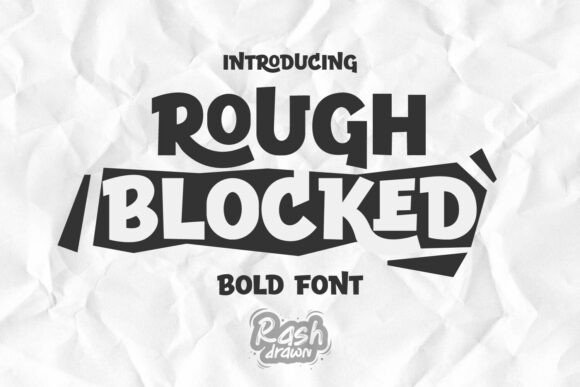
I was staring at a blank brand board, trying to find the right visual anchor for a local craft brewery’s identity refresh. The brief called for something rugged but refined, something that screamed "handmade" without looking like it was cut out of newspaper. I had tried several heavy sans-serifs, but they felt too corporate. Then I dragged Rough Blocked onto the canvas. It didn’t just sit there; it commanded attention. This isn’t just another typeface; it is a high-impact display font designed for those who want their message to be heard loud and clear. With its heavy, solid blocks and slightly irregular rough edges, this font captures that raw, tactile energy perfectly, making it an ideal candidate for brands that need to stand out in a crowded digital landscape.
Rough Blocked for Logo Design and Brand Identity Systems
When you are building a brand identity, the logo needs to work across various mediums, from a tiny favicon to a massive storefront sign. Testing Rough Blocked on a logo draft revealed its true strength: presence. The weight of the letters provides excellent visual hierarchy, ensuring that even at smaller sizes, the text remains legible and impactful. However, because this is a display font, it shines brightest when used as a primary logotype or a major headline rather than body copy. In my recent project for a handmade skincare line, I used Rough Blocked for the main brand name. The slightly irregular rough edges added a layer of authenticity and artisanal charm that a clean geometric sans-serif simply couldn't achieve. It signaled to the consumer that the product inside was crafted with care, not mass-produced in a sterile factory. For creative studios or boutique agencies looking to inject personality into their logo design, this typeface offers a distinct character that feels both modern and grounded.
Rough Blocked on Packaging Design and Product Labels
Packaging is often where typography meets texture, and Rough Blocked fits seamlessly into this physical realm. I placed the font on a mockup for a specialty coffee bag, imagining it printed on matte black paper with foil stamping. The bold, blocky shapes held up beautifully against the dark background, creating a striking contrast that draws the eye immediately. The font’s inherent "roughness" complements natural materials like kraft paper, wood, or recycled cardboard, making it a fantastic choice for eco-friendly brands or artisanal food products. When designing packaging design assets, readability is key, but so is shelf appeal. Rough Blocked strikes that balance by being large and assertive without sacrificing clarity. It works exceptionally well for short phrases, ingredient highlights, or limited-edition tags. If you are a small business owner launching a new product line, using this font can instantly elevate your packaging from generic to premium, giving your items a cohesive and professional look that resonates with consumers looking for quality.
Rough Blocked for Social Media Graphics and Web Headers
In the fast-paced world of social media, you have less than a second to capture attention. Rough Blocked is engineered for this exact moment. I tested the font in a series of Instagram posts for a local restaurant, using it for the day’s special and event announcements. The heavy weights stopped the scroll. Unlike delicate script fonts that get lost in a feed, Rough Blocked demands to be read. Its irregular edges give it a dynamic, energetic feel that aligns well with lifestyle, travel, and food content. For web design, I applied the font to a homepage hero section. Paired with a minimalist layout and ample white space, the typography became the focal point, guiding the user’s eye directly to the call-to-action button. It serves as a powerful accent font that can break up monotony and add visual interest to otherwise flat designs. Whether you are a marketer creating ad creatives or a blogger designing featured images, incorporating this creative font can significantly boost engagement by adding a layer of boldness and confidence to your visual storytelling.
Rough Blocked Pairing and Versatility in Modern Typography
No single font can do everything, and understanding how to pair Rough Blocked is crucial for maintaining a balanced modern typography system. Because of its strong personality and heavy weight, it pairs exceptionally well with lighter, cleaner typefaces. In my branding projects, I often pair it with a simple sans serif font for body text or secondary information. The contrast between the rough, bold headlines and the clean, readable supporting text creates a sophisticated hierarchy that is easy on the eyes. You might also experiment with pairing it with a delicate script font for a touch of elegance, though this requires careful spacing to avoid visual clutter. It is important to note that while Rough Blocked is versatile, it is strictly a display font. It should not be used for long paragraphs of body text, as the irregular edges can cause fatigue during extended reading. Instead, reserve it for headlines, posters, flyers, and editorial design elements where impact is prioritized over volume. By treating it as a statement piece rather than a utility tool, you ensure that your designs remain professional and visually coherent.
Practical Considerations for Commercial Use and Licensing
Before integrating Rough Blocked into any final client work, it is essential to review the specific license terms provided by the foundry. As a commercial font, usage rights can vary depending on whether you are using it for personal projects, client deliverables, merchandise, or print-on-demand products. Always check if the license covers webfont embedding, broadcast use, or unlimited merchandise sales. From a technical standpoint, the font file typically includes standard weights and may offer alternates or swashes that enhance its versatility. Ensuring you have the correct file formats for both print and digital applications will save time during production. For freelancers and agency owners, having access to a robust premium font library like this one allows for faster prototyping and more distinctive design solutions. By carefully testing the font in realistic scenarios—such as checking kerning on specific letter combinations or verifying legibility on different backgrounds—you can mitigate risks and deliver high-quality design assets that meet both aesthetic goals and commercial requirements.