Airborne Street: The Bubble Graffiti Typeface for Bold Brand Identity
I was staring at a blank Figma board, trying to crack the visual code for a new streetwear-inspired skincare line. The client wanted something that screamed "urban energy" but didn't feel gritty or dirty. They needed Airborne Street to infuse their design with dynamic energy and bold panache right from the first logo draft. That’s when I decided to stop browsing generic sans-serifs and actually test this quintessential bubble graffiti font. What started as a quick experiment turned into the backbone of the entire brand identity, proving that sometimes the right display fonts can solve complex branding problems with simple, rounded confidence.
Why Airborne Street Defines Modern Urban Aesthetics
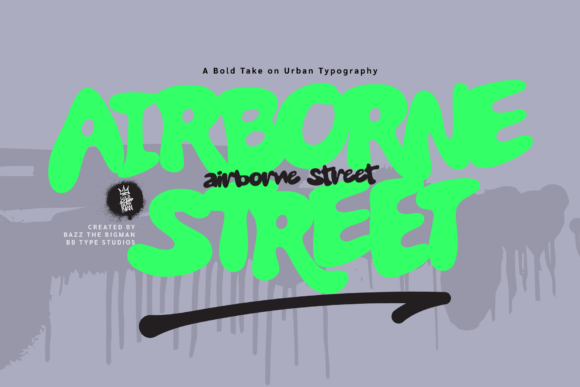
When you first pull Airborne Street into your design software, the immediate impact is its playful yet structured personality. This typeface seamlessly merges the soft allure of rounded shapes with the relentless attitude of street art culture. Unlike traditional graffiti tags that can be hard to read, Airborne Street maintains a high level of legibility while retaining that hand-drawn, spray-painted charm. For designers working on creative projects that need to stand out in a crowded digital marketplace, this font offers a unique solution. It bridges the gap between chaotic creativity and professional polish, making it an ideal choice for brands that want to appear approachable without losing their edge.
The visual weight of the letters feels substantial, which is crucial for headline work. When I placed the main logo on a dark background for the mockup, the white space within the bubbles created a natural contrast that drew the eye immediately. It’s not just a decorative element; it’s a functional tool for establishing hierarchy. By using Airborne Street for the primary brand name, we established a clear focal point that communicated fun and innovation before the customer even read the tagline. This balance of form and function is what makes it such a valuable asset in any modern typography toolkit.
Airborne Street for Packaging Design and Product Labels
One of the most exciting parts of this project was moving from digital screens to physical packaging. I tested Airborne Street on various label materials, including matte black stickers and glossy kraft paper boxes. The rounded contours of the font interact beautifully with different textures, adding a tactile quality to the visual experience. On the product labels, the font worked exceptionally well as a secondary accent, highlighting key ingredients or promotional offers like "New Flavor" or "Limited Edition."
- Sticker Applications: The bubble style allows for tight kerning, making it perfect for small circular or square stickers where space is limited but impact needs to be high.
- Bottle Wraps: When curved around cylindrical surfaces, the organic shapes of the letters maintain their integrity, avoiding the awkward stretching issues common with rigid geometric fonts.
- Color Versatility: I experimented with neon accents against muted backgrounds, and the font’s bold strokes held up well, ensuring readability even in vibrant color combinations.
This adaptability confirms that Airborne Street is more than just a screen-ready font; it is a robust commercial font capable of translating across mediums. Whether it’s slapped onto a tote bag or printed on a shipping box, the brand recognition remains consistent because the letterforms are distinct and memorable.
Airborne Street for Social Media Graphics and Digital Headers
In today’s content-driven landscape, grabbing attention in the first three seconds of a scroll is essential. I used Airborne Street extensively for the brand’s social media graphics, particularly for Instagram posts and story highlights. The font’s inherent "pop" factor stops the thumb mid-scroll. When paired with clean, minimalist photography, the text becomes the hero, guiding the viewer’s eye through the message without overwhelming the image.
For website headers and landing pages, the font serves as an excellent display font for hero sections. However, practical advice dictates that it should not be used for body copy. Instead, I recommend pairing it with a clean sans serif font for paragraphs and navigation menus. This combination creates a sophisticated contrast: the playful nature of Airborne Street draws interest, while the neutral supporting typeface ensures information is consumed easily. This strategy enhances user engagement by balancing entertainment with utility, a key principle in effective web design.
Airborne Street for Editorial Design and Print Marketing
While digital presence is critical, print materials still hold significant value in building trust and tangible brand connection. During the final stages of the project, I applied Airborne Street to editorial designs such as lookbooks, event flyers, and zine-style brochures. The font’s retro-futuristic vibe adds a layer of nostalgia that resonates well with younger demographics who appreciate authentic, handcrafted aesthetics.
In these contexts, the font works best when treated as an artistic element rather than just text. I experimented with overlapping layers and drop shadows to mimic the depth of real graffiti walls, creating a sense of movement and dimension. For flyers promoting pop-up shops or product launches, the boldness of the lettering ensured that the date, time, and location stood out clearly. The versatility of this typeface allows it to transition smoothly from a subtle watermark in the background of a magazine spread to a dominant headline on a concert poster, demonstrating its wide range of applications in creative industries.
Practical Tips for Integrating Airborne Street Into Your Workflow
If you are considering incorporating Airborne Street into your own projects, here are some practical observations from my testing process. First, always check the included styles and alternates. Many bubble fonts offer slight variations in letter shapes that can add character to repeated words. Utilizing these alternates prevents monotony and keeps the design feeling fresh and hand-crafted.
Secondly, pay close attention to spacing. Because the letters are rounded and often touch or overlap, default kerning settings might not provide the optimal visual rhythm. Take the time to manually adjust the spacing, especially for short words or acronyms, to ensure the "bubble" effect looks intentional rather than cramped. Finally, verify the file formats and licensing terms. As a premium font, ensuring you have the correct commercial license protects your brand from legal issues and supports the type designer. With the right preparation, Airborne Street can elevate your branding from ordinary to extraordinary, providing that burst of creative energy needed to make your project unforgettable.