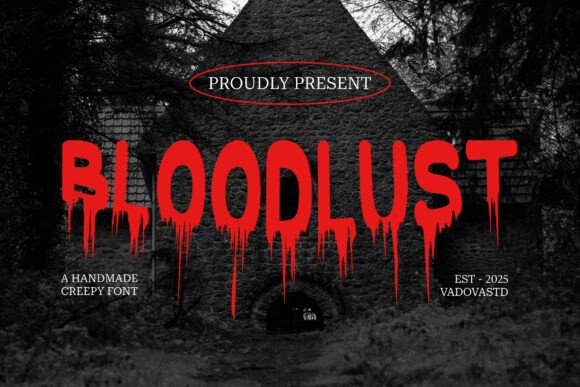
Bloodlust Typeface: A Bold Horror Display Font for Dark Digital Brands
I was staring at a blank hero section on a client’s landing page, trying to find the right visual hook. The project was for an immersive escape room experience in downtown Chicago, and the brief demanded something visceral—something that made visitors feel the tension before they even clicked "Book Now." Standard sans-serif fonts felt too sterile, and elegant serifs were too soft. That’s when I pulled Bloodlust into my design file. It wasn’t just a font choice; it was a mood setter. This display typeface features a bold horror display style with liquid-like dripping edges and irregular stroke endings that create an intense and unsettling atmosphere. In this post, I’ll walk you through how I integrated Bloodlust into a real-world web layout, what worked, what didn’t, and how you can use this premium font to elevate your own dark-themed digital projects.
Bloodlust Hero Headlines for Immersive Escape Room Websites
When testing Bloodlust, the first thing I noticed was its immediate impact as a headline element. For the escape room site, we placed the main title directly over a moody, low-light background image of a foggy corridor. The liquid-like dripping edges caught the eye instantly, creating a sense of movement and danger without requiring heavy graphic overlays. As a display font, Bloodlust is designed to be seen, not read paragraph by paragraph. Its irregular stroke endings add a raw, organic texture that feels hand-crafted yet professionally rendered. I found that using it for short, punchy headlines—like "Survive the Night" or "Enter If You Dare"—maximized its dramatic potential. However, readability on mobile screens required careful sizing. On smaller viewports, the intricate details of the drips can become muddy if the font size is too small, so I kept the hero text large and centered, ensuring the typography remained the focal point rather than getting lost in the noise of the background imagery.
Bloodlust Call-to-Action Buttons for High-Impact Campaign Pages
One of the biggest challenges in horror-themed web design is balancing atmosphere with usability. You don’t want the "Buy Tickets" button to look like part of the horror scene—it needs to stand out as a clear action item. I experimented with using Bloodlust for secondary calls-to-action (CTAs) on the campaign landing page. While the font is undeniably striking, I quickly realized that using it for long button text reduced clarity. Instead, I used it sparingly for single-word actions like "Enter" or "Play," paired with a clean, high-contrast color like blood red against a black background. This approach leveraged the font’s unsettling atmosphere while maintaining a clear visual hierarchy. The key takeaway here is that Bloodlust works best as a decorative accent for CTAs rather than the primary functional text. By reserving the full horror aesthetic for the most critical conversion points, we created a memorable user journey that felt both thrilling and navigable.
Bloodlust Blog Graphics and Social Media Assets for Brand Identity
After finalizing the website headers, I extended the typographic identity to the client’s social media graphics and blog post thumbnails. Since Bloodlust is delivered in high-quality font formats, including webfont versions, I was able to ensure consistency across all digital touchpoints. Using the same display font for blog headers and Instagram story backgrounds helped unify the brand’s visual language. For example, a blog post titled "Top 5 Scariest Haunted Houses in America" looked significantly more engaging with Bloodlust as the overlay text compared to a standard Arial or Helvetica. The irregular stroke endings added a layer of professionalism that hinted at the content’s genre without needing complex Photoshop effects. This strategy saved time on graphic design while strengthening brand recognition. When users scrolled through their feeds, the distinctive dripping style immediately signaled that the content belonged to this specific, edgy brand.
Bloodlust Pairing Strategies for Editorial Web Design Layouts
A common mistake designers make with aggressive display fonts is letting them dominate every line of text. To maintain readability and a polished online brand experience, I paired Bloodlust with a simple, neutral sans-serif font for body copy. The contrast between the chaotic, dripping edges of the display font and the clean, geometric lines of the body text created a balanced composition. This pairing technique is crucial for editorial design, where users need to scan content comfortably. I tested several options but found that a lightweight sans-serif allowed the horror theme to shine without overwhelming the reader. Additionally, I avoided pairing Bloodlust with other script or handwritten fonts, as the combination became visually cluttered and difficult to parse. By keeping the supporting typography minimal, the display font retained its power as the star of the layout. This approach also improved accessibility, ensuring that the site remained usable for readers who might be sensitive to overly complex visual stimuli.
Bloodlust Commercial Licensing and File Formats for Client Projects
Before deploying any new typeface in a client project, it’s essential to verify the licensing terms and available file formats. Bloodlust comes in various weights and styles, which provided flexibility for different layout needs—from large hero banners to smaller section dividers. I checked the included formats to ensure compatibility with our web development stack, looking specifically for WOFF2 support for fast-loading visual content. Understanding the commercial font licensing was also critical; since this was a paid client project, we needed to confirm that the license covered unlimited web usage and digital distribution. The font’s versatility meant we could use it across multiple assets, from the main website to email newsletters and digital ads, without purchasing additional licenses for each platform. This efficiency not only streamlined the design process but also kept the project within budget. Always review the end-user license agreement (EULA) carefully to avoid legal issues, especially when dealing with niche genres like horror or thriller themes that may have specific usage restrictions.
Bloodlust Portfolio Showcases for Creative Digital Product Creators
For fellow web designers and UI creators looking to add edge to their portfolio sites, Bloodlust offers a unique opportunity to showcase personality. I recently updated my own portfolio’s "About Me" section header using this font, placing it over a dark gradient background. The result was a striking introduction that immediately communicated my ability to work with diverse styles beyond corporate minimalism. Potential clients browsing my site could see firsthand how I handle challenging typographic constraints. The font’s intense and unsettling atmosphere served as a conversation starter, demonstrating that I’m comfortable pushing creative boundaries. Whether you’re designing a boutique online store, a coaching website, or a course sales page, incorporating a bold display font like Bloodlust can help you stand out in a crowded market. It signals confidence and a willingness to experiment, qualities that are highly valued in today’s competitive digital landscape. Just remember to use it strategically—let the font do the talking, but keep the underlying structure solid.